Cast acrylic versus extruded acrylic
|
|
Acrylic is produced in two basic versions, cast and extruded. Cast acrylic is produced by
mixing the acrylic liquid ingredients in molds. For acrylic plates between two glass plates. A chemical process in the mold create a homogeneous material with equivalent properties in all
directions. In contrast, extruded acrylic is produced by continuously pushing acrylic mass
through a form, while the chemical process takes place. Extruded acrylic is therefore
heterogeneous, with properties which vary depending on the direction. We call it the extrusion direction for acrylic sheets. Cast acrylic is usually regarded as a better quality than extruded acrylic
even though it is in fact two different materials with the advantages and disadvantages.The various
production methods provide some small but important differences:
|
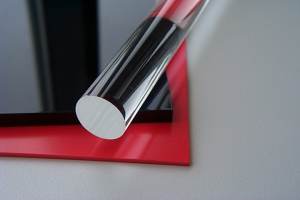
Colored acrylic sheets are usually cast acrylic.
Profiles are extruded acrylic.
|
- Chemical Resistance
Cast acrylic is more resistant to the same solvents.
- Laser cutting
When laser cutting extruded acrylic , there will come a burr on one side of the part. On the cast acrylic there is
almost no burrs. The edges on extruded acrylic parts can look a bit different depending on the direction of the acrylic extrusion.
- Laser engraving
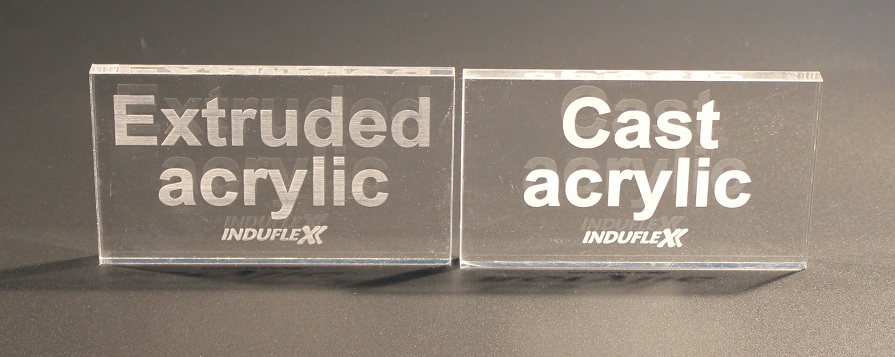
The Laser engraving will on extruded acrylic look matt gray. On the cast acrylic will look matt white.
- Heat bending and thermoforming
A sheet of extruded acrylic can, because of the acrylic extrusion direction, behave differently depending on
the bending direction relatively to the extrusion. With cast acrylic, it makes no difference.
When cast colored acrylic is heated for thermoforming or heat bending the color can change. Matt-colored surfaces can become clear and clear surfaces can become matt.
In addition, the shade of color can change. Cast acrylic is harder to bend / shape.
- Thickness tolerance
Sheets of cast acrylic vary more in thickness. A cast 3 mm acrylic sheet vary +/- 15%.
While an extruded sheet only vary +/- 5%. The dispersion within the tolerance also seems
to be less on extruded sheets.
The high tolerance on cast acrylic sheets often comes as a surprise to
designers, with many construction errors to follow.
- Scratch-resistant
Cast acrylic it more scrats resistant than extruded acrylic.
- Flame polishing
Cast acrylic is harder to flame polish.
- Colors
Cast acrylic is produced in a many different color and thicknesses. The color selection is more more limited for extruded acrylic. If one order a special color from a supplier, it will in most cases be cast acrylic.
- Tension
There is more tension in extruded acrylic.
|
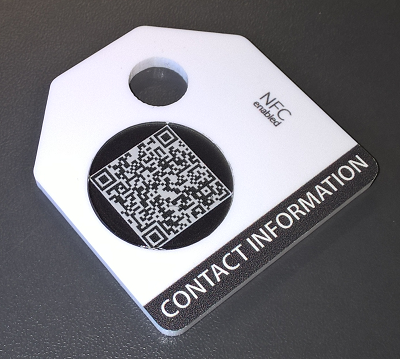
A digital luggage tag made of both cast and extruded acrylic.
3 mm white cast acrylic sheet are printed with a digital printer. A round 2 mm deep milling makes room for an acrylic piece with a QR code can be inserted.
The tag is laser cut from the sheet.
The QR codes are printed inverted on 1.5 mm clear extruded acrylic sheets. The printed sheets have double adhesive tape applied on the printed side and is then laser cut into circular pieces.
The 2 acrylic parts are glued together with an NFC chip in between.
The product can be purchased from
Tagonce
|
|
| |
|
|
|
With a CO2 laser both cast and extruded clear acrylic can be laser engraved. The colour of the engraving becomes white on cast acrylic - light grey on extruded acrylic. Note that clear acrylic cannot be laser engraved with a YAG laser.
|
|
|